
The rapid development of agricultural industrialization, livestock and poultry feed production is the key link between planting and farming. It has become the first choice of many investors to start their own business by virtue of the stable market demand and considerable profit space. But to start this business, pre-investment planning directly determine the success or failure of the project – production scale, equipment configuration, site selection, even the slightest difference, will affect the start-up costs.
In this article, we will dismantle the clear start-up cost composition, the investment gap between different scales, the core factors affecting the cost, and then share the cost reduction techniques and profitability analysis, to give investors a guide that can directly land.
Before smashing money, first think about a question: livestock feed production in the end what is good? Why can it become a high-potential agricultural entrepreneurship program? The answer is hidden in the market trends and industry demand, summarized in 5 core advantages:
The global market has been expanding. According to industry data, by 2028, the size of the global animal feed market will reach 536 billion U.S. dollars, with a stable compound annual growth rate of 4.3%. The wide space for growth can leave enough market share for new entrants, so they don’t have to worry about no business.
The end demand is rigid, will only increase and will not decrease. With the population growth and the improvement of living standards of residents, the demand for meat, dairy products, aquatic products is growing. The large-scale development of livestock and poultry, aquaculture, directly driven by the demand for high-quality feed, the market is stable and long-term good.
This is a highly profitable agricultural business opportunity. Compared with the traditional planting industry, livestock and poultry feed production belongs to the high value-added agricultural supporting industries, higher profit margins. And the upstream and downstream of the industry chain is closely linked, as long as the cost and quality control, can be stable and profitable, full potential.
The scale of access is very flexible, suitable for a variety of investors. No need to invest a huge amount of money at once, according to their own financial strength, choose small-scale, medium-scale or large-scale production. Whether it is an individual farmer, small business, or a large investor with strong strength, can find a suitable entry point for themselves.
Diversification of products and strong anti-risk ability. The feeds can cover chickens, ducks, pigs, cattle and other livestock and poultry, and can also be adapted to fish, shrimp and other aquatic products; not only can we produce full-price feeds and premixed feeds, but also customize special feeds according to customer needs. The diversified structure can effectively diversify market risks and make revenue more stable.
Major Startup Costs for Livestock Feed Manufacturing Business

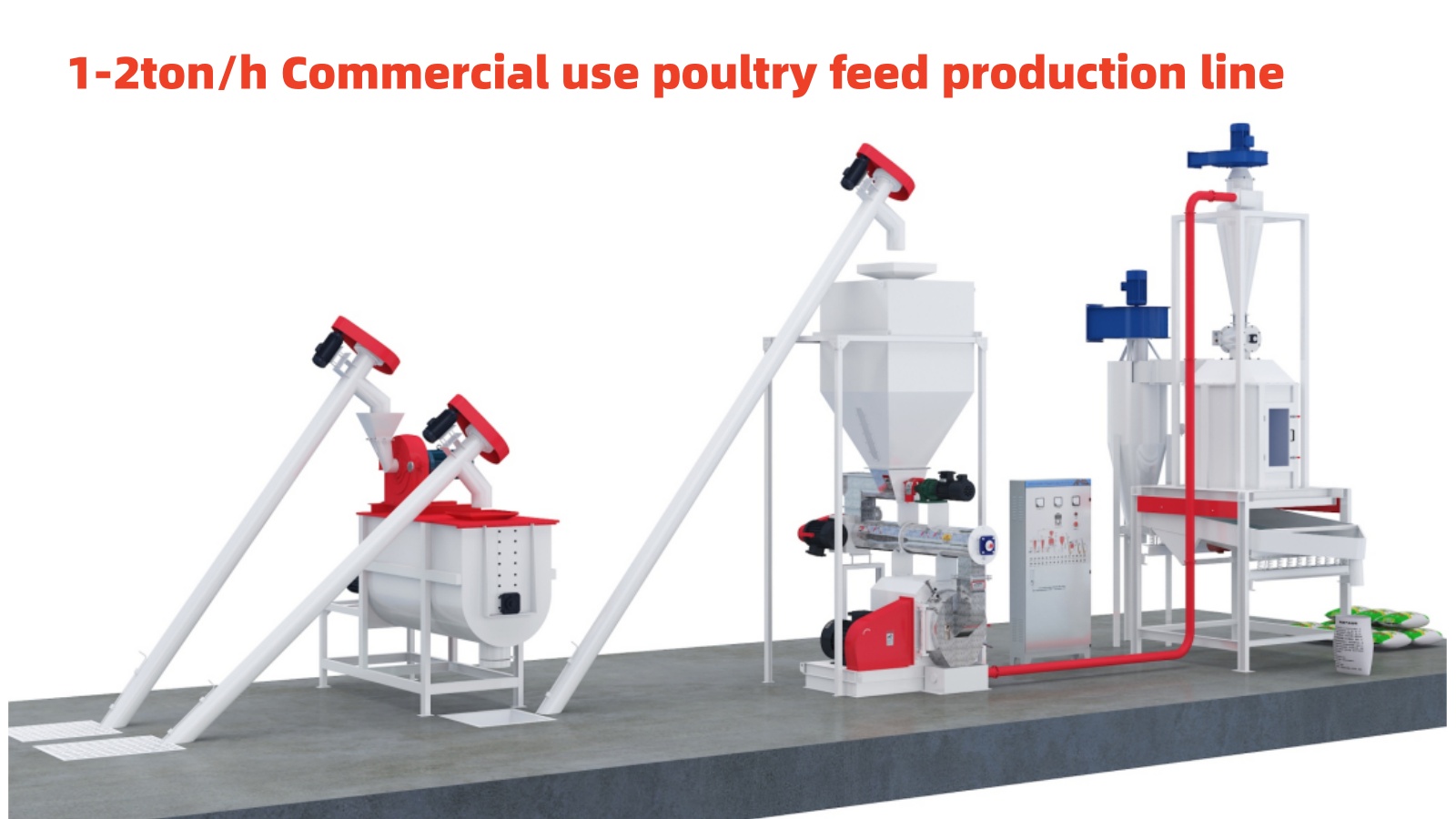
The startup costs for livestock and poultry feed manufacturing are focused on five major segments – equipment, site, supporting facilities, logistics and working capital. Each segment has a clear core expenditure item, investors have to plan one by one, do not miss the key costs.
1. Equipment investment (core expenditure items)
The core of feed production is equipment, equipment performance directly determines production efficiency and product quality. Different sizes of production lines, equipment investment gap is very large, the core equipment are mainly these categories:
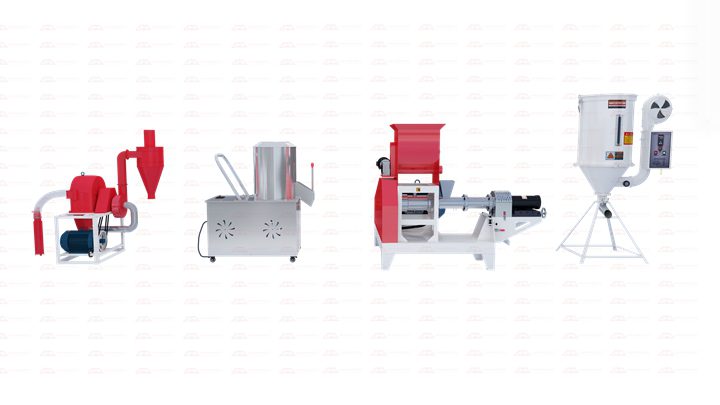
Grinder is the first process, used to corn, soybean meal, wheat bran and other raw materials crushed into uniform powder. Small pulverizer input is about 5,000-20,000 U.S. dollars, and the large automatic one is more than 50,000 U.S. dollars.
The mixer is responsible for mixing the crushed raw materials with vitamins, minerals, additives, etc. to ensure the nutritional balance of the feed. A small one puts in USD3000-15000, while a large and efficient model costs USD20000-60000.
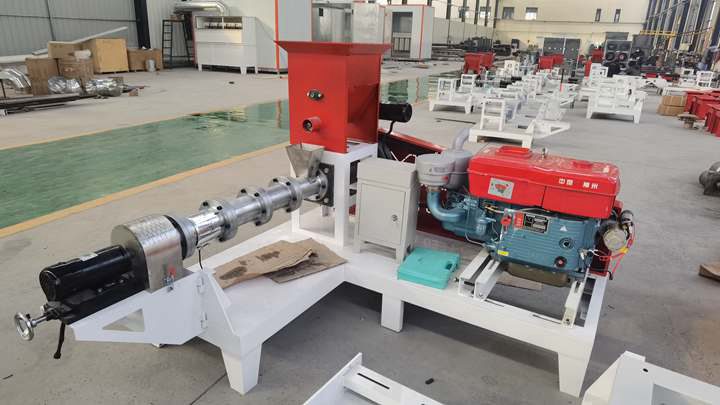
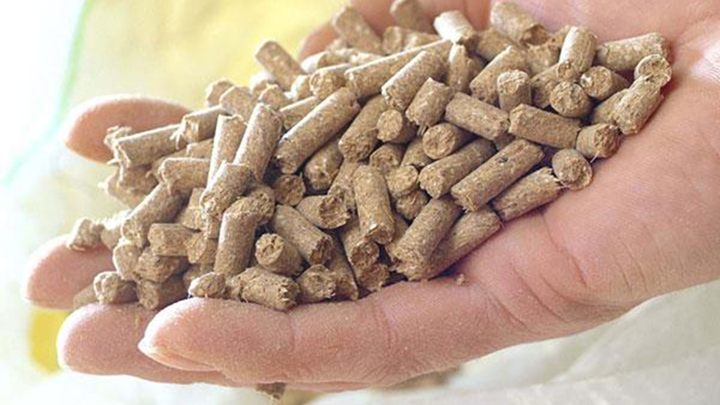
Feed pellet mill is the core of the core, can be mixed raw materials pressed into granules, suitable for livestock, poultry, aquaculture needs, directly determine the molding effect. Small pellet mill can be taken for 10,000-3,000 USD, and large fully automatic one will cost 80,000-200,000 USD.
Cooling machine can’t be less, the temperature of pellet feed is high after pressing, and it is easy to deteriorate without cooling. The input is about 5,000-25,000 U.S. dollars, to match the capacity of the pellet machine.
Packing machine is used for weighing and packing of pellet feed, which is convenient for storage and transportation. A small semi-automatic one costs US$3,000-10,000, while a large fully automatic one costs US$15,000-40,000.
Automatic batching system can improve efficiency, reduce manual error and realize automatic weighing and batching of raw materials. The small semi-automatic system is US$8,000-20,000, while the large fully automatic one costs US$30,000-80,000.
2. Plant and infrastructure costs
Feed production requires a fixed plant and storage space, the cost mainly includes site rental/construction, warehouse construction, etc. The specific expenditure depends on the location and size of the site:
The workshop has to be chosen in a ventilated, dry and easily accessible place. Small workshop (suitable for small-scale production) annual rent of about 5,000-15,000 U.S. dollars, self-built (including decoration) to 20,000-8,000 U.S. dollars; large-scale workshop self-built cost can reach 100,000-300,000 U.S. dollars or more.
Raw material warehouse should be able to moisture-proof, insect-proof, mold-proof, used to store corn, soybean meal, wheat bran and other raw materials, construction or rental cost of 3000-20000 U.S. dollars, the larger the scale, the higher the cost.
Finished feed warehouse should also be kept dry and ventilated to avoid moisture deterioration, the cost of $2000-15000 U.S. dollars, and raw materials warehouse can be integrated planning, can save some costs.
Silos and bulk storage equipment, suitable for large-scale storage of corn, soybean meal and other bulk raw materials, can reduce transportation and storage losses. Small silos are US$5,000-20,000, while large ones cost US$30,000-100,000.
3. Utility installation cost
Feed production can not be separated from stable power, steam and other energy sources, utility installation is an essential expense, mainly including these categories:
Power transformer can guarantee stable power supply for the production line to avoid unstable voltage affecting the production, the investment is US$3000-15000, to be matched according to the total power of the equipment.
Boiler system provides steam for the pellet mill to help the raw materials to be molded. A small boiler costs US$5,000-20,000, while a large one costs US$25,000-60,000.
Steam system connects the boiler with the pellet mill to ensure a stable supply of steam, with an investment of US$2,000-8,000, to be installed in conjunction with the boiler.
The generator is for emergency use to cope with sudden power outage and ensure the production is not interrupted. The small one costs US$2,000-8,000, while the large one costs US$10,000-30,000.
4. Transportation and logistics costs
Feed production involves the transportation of raw materials procurement and finished product sales, logistics costs are important expenses in the start-up phase, mainly these items:
Raw material transportation vehicles for purchasing raw materials such as corn and soybean meal. Small production lines can be leased at an annual rent of US$3,000-10,000; large production lines are recommended to purchase specialized vehicles with an investment of US$20,000-80,000.
Finished product distribution vehicles, responsible for transporting feed to farms and dealers. Small production line can cooperate with logistics company, the annual cost of cooperation is 2000-8000 U.S. dollars; large production line needs to purchase distribution vehicles, investment 15000-60000 U.S. dollars.
Loading equipment, such as forklifts and conveyor belts, is used to load and unload raw materials and finished products, with an investment of US$3,000-15,000, depending on the scale of production.
5. Working capital
Working capital is the key to the smooth startup and initial operation of the project, and must be sufficiently set aside to meet daily expenses, mainly including these three parts:
Raw material procurement funds, corn, soybean meal and other core raw materials, the initial stage to reserve 1-3 months of use, the investment of 5,000-50,000 U.S. dollars, the larger the scale, the more reserves, the higher the demand for funds.
Labor wages, the initial stage to recruit operators, technicians, managers, monthly expenditure of 2000-10000 U.S. dollars, depending on the size of the production line and the number of personnel.
Initial operating funds, including equipment commissioning, raw material testing, marketing, utilities and other miscellaneous items, to set aside $3,000-20,000 to cope with emergencies during the start-up phase.
Livestock and poultry feed mill start-up costs by production capacity
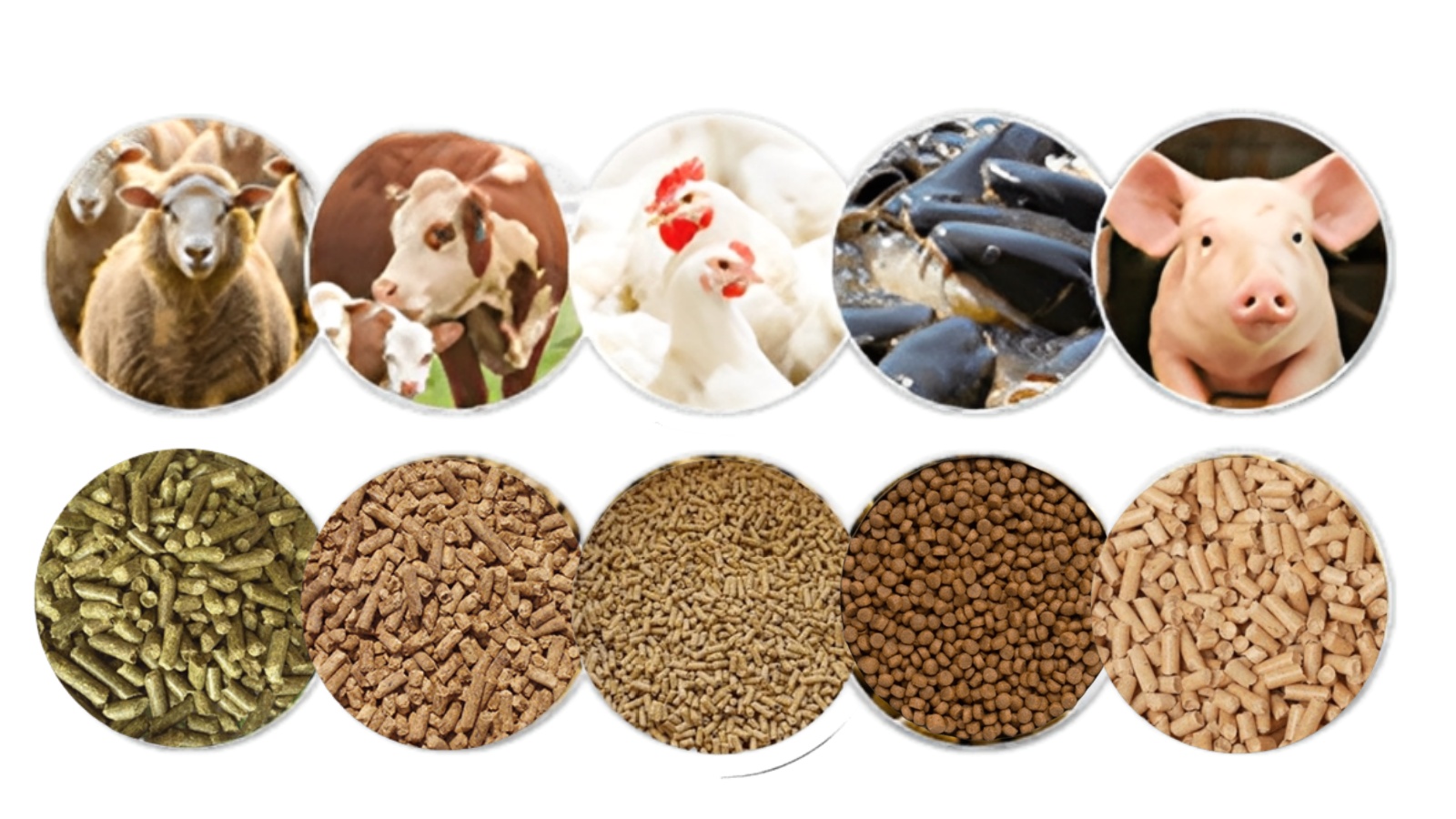
Start-up costs vary greatly for feed mills with different production capacities. Investors can choose the appropriate scale according to their own financial strength, market demand, the following is a detailed reference of the three mainstream scales:
1. Small-scale feed mill (1-5 TPH, tons per hour)
The investment amount is between US$40,000-80,000, which is suitable for individual farmers, small-scale farms supporting, or targeting local small-scale farmers and farmers’ markets to supply feed. The market radius is small and the operation is flexible.
The equipment configuration is based on semi-automatic production line, the core equipment is a small grinder, mixer, pellet mill, cooling machine and semi-automatic packaging machine, without the need to invest in large-scale automatic dosage system, the equipment investment accounts for 50% -60% of the total investment.
The advantages are obvious: less start-up capital, low threshold, low operating costs, flexible adjustment of feed formulas according to local demand, low risk, especially suitable for first-time investors to enter the feed industry.
2. Medium-scale feed mill (5-10 TPH, tons per hour)
With an investment amount of USD 80,000-150,000, it focuses on commercial feed supply and can cover many surrounding townships, small and medium-sized farms, and can undertake batch orders, with a certain degree of market competitiveness.
The equipment configuration is a partially automated production line with semi-automatic batching system, high-efficiency pellet mill, automatic cooler and packaging machine, capable of mass production, with equipment investment accounting for 45%-55% of the total investment.
Compared with small scale, it has higher production efficiency, lower unit feed production cost, and also can compress the cost through bulk purchase of raw materials, more profit space, suitable for investors with certain capital strength and market resources.
3. Large-scale industrial feed mill (10+ TPH, tons per hour)
Investment amount of $100,000-500,000 or more, the main large-scale commercial production, can supply large-scale farms, regional distributors, and even achieve cross-regional sales, with large-scale, standardized production capacity.
The equipment configuration is a fully automated production line, equipped with fully automated batching system, large-scale high-efficiency pellet machine, continuous cooling machine, fully automated packaging machine and silo storage system, capable of realizing unattended production, with equipment investment accounting for 40%-50% of the total investment.
The most prominent advantages: high production efficiency, the lowest cost per unit of feed production, can enhance market competitiveness through large-scale procurement, standardized production, the largest profit space, suitable for investors with strong financial strength and perfect market channels.
Factors affecting the start-up cost of livestock and poultry feed production
Even the same size of the feed mill, start-up costs may be much worse, the core is affected by a variety of factors. Investors to find out these factors in advance, in order to reasonably control costs, as follows:
1. Production capacity
This is the core factor affecting the start-up cost, different capacity of equipment, plant, logistics configuration, the gap is huge. 1-5 TPH of small-scale factories, equipment and plant investment is relatively cheap; and 10 + TPH of large-scale factories, a single core equipment investment may be more than 100,000 U.S. dollars, coupled with a large-scale plant, silos, fully automated systems, the cost will rise dramatically, and the gap between the two investments can be 10 times or more. The investment difference between the two can be more than 10 times.
2. Feed type
Different types of feeds, with different production equipment and processes, can have different start-up costs:
Compared with powder feed and pellet feed, powder feed does not need to invest in pellet mill and cooler, so the equipment cost can be reduced by 20-30%; however, pellet feed is the mainstream of the current market, although the cost is high, and the added value of the product is also higher.
Compared with premixed feed and full-price feed, the production process of premixed feed is simple and the equipment investment is low (mainly needing pulverizer and mixer); full-price feed needs a complete production line covering pulverizing, batching, mixing, pelletizing, cooling and packaging, and the equipment investment is higher.
3. Automation level
The automation level directly affects the equipment investment and labor cost, and the difference is obvious in the comparison of the three:
Manual production line, equipment investment is the lowest (about 30,000-60,000 U.S. dollars), but requires a lot of labor, high labor costs, low productivity, suitable for small-scale, low-cost start-up.
Semi-automatic production line, equipment investment is medium (about 60,000-120,000 U.S. dollars), can reduce part of the labor, balance the cost of equipment and labor costs, is the first choice for small and medium-sized factories.
Fully-automatic production line, with the highest equipment investment (about 100,000 USD or more), but with the lowest labor cost and the highest production efficiency, suitable for large-scale factories, and long-term operation can reduce the unit cost.
4. Raw material location
The location of raw material purchasing directly affects the transportation cost, which in turn affects the start-up cost. If the factory is located in the main grain producing areas such as corn and soybean meal, the raw material purchasing cost is low and the transportation distance is short, which can save a lot of transportation cost, and the logistic cost in the start-up stage can be reduced by 10%-20%.
If it is far away from the raw material production area, the transportation distance is long, not only will increase the cost of transportation of raw materials, but also may produce additional costs such as warehousing, loss, and so on, indirectly pushing up the start-up costs.
5. Plant location and land costs
The choice of plant location directly affects the cost of land lease/construction. Industrial parks have convenient transportation and good supporting facilities (electricity, water supply, sewage), but high land lease/construction costs, which are suitable for large-scale factories, and can also enjoy industrial support policies, which are more convenient for long-term operation.
Rural areas have low land lease/construction costs, which can reduce plant investment, but the supporting facilities may not be perfect, requiring additional investment in electricity and sewage systems, and are more suitable for small-scale factories.
6. Energy infrastructure
Feed production consumes a lot of electricity and steam, and the degree of energy infrastructure will also affect the start-up costs. If the local power supply is sufficient, there is no need to invest in additional generators or transformer upgrades, which can save the cost of power facilities; if the power supply is insufficient, you will have to invest in upgrading transformers and purchasing powerful generators, which will increase the start-up costs.
In addition, the need for a steam boiler also affects costs: for pellet feed production, a boiler system must be put in place; for powder feed production, a boiler can be dispensed with, saving the associated investment.
Operating Costs of a Livestock Feed Production Plant
Start-up costs are one-time inputs in the early stages, while operating costs are long-term ongoing expenses that directly affect the profitability of the project. Investors should plan operating costs in advance to ensure stable cash flow. Core operating costs are mainly in these categories:
1. Raw material costs (60-70% of total operating costs)
Raw materials are the core expense of feed production, accounting for the vast majority of operating costs, which mainly include two parts:
The core raw materials are corn, soybean meal, wheat bran, etc. The price is affected by the fluctuation of market conditions, which is the most unstable part of the operation cost. Costs can be controlled by purchasing in bulk and establishing long-term cooperation with suppliers.
Additives include vitamins, minerals, amino acids, mold inhibitors, etc., which are used to enhance feed nutrition and shelf life. Although the percentage is not high, the cumulative cost is not low after long-term consumption.
2. Labor cost
Labor cost depends on the automation level and scale of the production line, which is mainly divided into three categories of personnel:
Operators are responsible for equipment operation, loading and unloading of raw materials, packaging of finished products, etc. Small-scale factories need 2-5 people, medium-sized and large-scale factories need 5-20 people, with a monthly salary of roughly $1,000-3,000 per person, depending on regional differences.
Technicians are responsible for equipment maintenance, feed formula adjustment, product quality testing, monthly salary of about 1500-4000 U.S. dollars / person, medium and large-scale factories need at least 1-2 professional and technical personnel.
Managers are responsible for production management, marketing and sales, financial management, with a monthly salary of about US$2,000-5,000/person, and large-scale factories need to be equipped with a complete management team.
3. Energy consumption cost
Feed production consumes a large amount of electricity and fuel, which mainly consists of two parts:
Electricity consumption accounts for 60%-70% of the energy cost, mainly the electricity expenditure for equipment such as pulverizer, granulator, mixer and so on. The monthly electricity cost of a small-scale factory is about 500-2000 USD, while the monthly electricity cost of a large-scale factory can reach 5000-20,000 USD.
Fuel consumption is mainly the expenditure of coal and natural gas for the boiler system, which is about 300-1500 USD per month, depending on the size of the boiler and the production hours.
4. Equipment maintenance cost
Equipment running for a long time, need regular maintenance, replacement of wearing parts, the cost mainly includes two parts:
Replacement of wearing parts, such as ring die of pellet mill, hammer blade of pulverizer, bearings, etc., need to invest 500-3000 USD per month, which is adjusted according to the frequency of equipment use and degree of wear.
Regular overhaul, the equipment should be fully overhauled every year, the cost is about 1,000-5,000 U.S. dollars, and the overhaul cost of large production line will be higher.
5. Logistics cost
The logistics expenditure in long-term operation mainly includes two parts:
Raw material transportation, the transportation cost of regularly purchased raw materials, about US$1000-5000 per month, adjusted according to the purchasing volume and transportation distance.
Finished product distribution, the cost of transporting finished feed to customers, about $800-4,000 per month, related to sales size and distribution distance.
How to Reduce Startup Costs for Livestock and Poultry Feed Production
Controlling startup costs is the key to a successful project for most investors, especially first-timers in the industry. You can realize low-cost startup and effectively reduce risks by following 7 ways:
Prioritize small-scale production. Initially do not have to pursue large-scale, high automation, from 1-5 TPH small-scale production line to start, the start-up capital can be controlled in 40,000 – 80,000 U.S. dollars. When the market stabilizes and the capital is recovered, then gradually expand the scale, which can reduce the initial investment risk.
Choose local raw materials. Priority is given to purchasing locally produced raw materials such as corn and soybean meal to reduce transportation distance and cost. At the same time, and local farmers, cooperatives to establish long-term cooperation, can also reduce the purchase price of raw materials, further cost savings.
Select multifunctional feed equipment. Select equipment that can be compatible with a variety of feed production, such as a crusher can crush corn, soybean meal, wheat bran and other raw materials, a pellet machine can produce different specifications of the pellet feed. This can avoid duplication of equipment purchases and reduce equipment investment.
Adopt semi-automatic production line. Semi-automatic production line can balance the cost of equipment and labor costs, do not have to invest in expensive fully automatic system, but also reduce the number of labor. It is more efficient than manual production line and less costly than fully automatic production line, which is the optimal choice for small and medium scale investors.
Optimize feed formulation. Under the premise of ensuring that the nutrition of the feed meets the standard, optimize the formula, reduce the use of high-priced raw materials, and choose cost-effective alternative raw materials (such as replacing part of the soybean meal with wheat bran). This not only reduces raw material procurement costs, but also reduces equipment losses.
Later gradually increase production capacity. Initially do not have to configure a one-time full load of equipment, equipment can be reserved for upgrading space. When the market demand increases, sufficient funds, and then upgrade equipment, expand production capacity, to avoid the initial capital idle.
Selection of energy-efficient equipment. Select energy-saving crusher, pellet mill, boiler and other equipment, although the initial investment may be slightly higher, but the long-term operation can significantly reduce power, fuel consumption, indirect cost savings, to achieve “small investment in the early part of the long-term savings.
Return on investment and profitability analysis of livestock and poultry feed production business
Investors are most concerned about, nothing more than “how long to return to the capital? How much money can I earn?” . The following is a detailed analysis of the profitability factors, return on investment cycle, and profitability of the feed production business, combined with the general situation of the industry, to give you a reference:
1. Profitability factors
The profitability of feed production is mainly affected by 4 core factors, control these, you can effectively improve the level of profitability:
Feed sales price, affected by market supply and demand, feed type, product quality. The price of pellet feed is higher than powder feed, and the price of premixed feed is higher than full-price feed. You can increase the sales price by improving product quality and building your own brand.
Raw material cost, accounting for 60-70% of the operating cost, controlling the procurement cost is the key to improve profitability. Raw material costs can be reduced through bulk purchasing, long-term cooperation, and selection of local raw materials.
Production efficiency, the higher the efficiency, the lower the production cost per unit of feed. By improving the automation level of equipment and optimizing the production process, we can improve the production efficiency and reduce the unit cost.
Market demand, directly determine the sales scale. Research the local breeding market in advance, targeted production of suitable feed products, expanding stable customer groups, in order to ensure the full release of production capacity.
2. Return on investment cycle
The return on investment cycle of the feed production business is affected by the scale of production and market conditions, and the general situation of the industry is as follows:
For small-scale feed mills (1-5 TPH), the return on investment cycle is about 2.5-3 years. Although the production scale is small, the unit cost is relatively high, and the payback speed is slower, the risk is also small.
Medium scale feed mill (5-10 TPH), the payback cycle is about 2-2.5 years. Production efficiency is improved, unit cost is reduced, and sales scale is larger, payback speed is faster than small scale.
For large-scale industrial feed mill (10+ TPH), the payback cycle is about 1.5-2 years. Scale production brings cost advantage, also can undertake large orders, stable sales and fastest payback.
3. Profitability
Profit margin and production scale are positively correlated, the larger the scale, the higher the profit margin, the industry’s general profit margin is as follows:
Small-scale feed mill, profit margin of about 10-15%, suitable for first-time entrepreneurs. Although the profit margin is not high, the operation is flexible and the risk is controllable.
Medium-sized feed mills, profit margins of about 12-20%, through bulk purchasing, improve production efficiency, but also to further expand profitability.
Large-scale feed mills, profit margin of about 15-25%, scale production to reduce unit costs, but also through the brand premium, large orders to enhance profitability, is the model with the largest profit margin.
4. Example of profitability calculation
Take 5 TPH (tons per hour) of medium-sized feed mill as an example, combined with the industry’s general data, to give you a specific profitability calculation for reference:
Production scale: 5 TPH, 8 hours of production per day, 25 days of production per month, monthly production = 5 x 8 x 25 = 1000 tons.
Unit cost: raw material cost about 300 USD/ton, labor, energy, maintenance, logistics and other comprehensive cost about 50 USD/ton, total cost about 350 USD/ton.
Selling price: the selling price of pellet feed is about 400 USD/ton (medium level in the industry).
Unit profit: 400-350=$50/ton.
Monthly profit: 1000×50=$50,000.
Annual profit: 50,000×12=600,000 USD (after deducting off-season, equipment maintenance and other factors, the actual annual profit is about 500,000-550,000 USD).
Return on investment cycle: Calculated on the basis of medium-sized investment of 120,000 U.S. dollars, the payback cycle is about 2.4 years, which is consistent with the general level of the industry.
Conclusion
Livestock and poultry feed production business is a “low risk, stable return, long-term good” agricultural entrepreneurship program. The core difference in start-up costs lies in the scale of production, equipment configuration and site selection. According to their own financial strength, market resources, investors can choose a suitable start-up mode, through optimizing costs, improve efficiency, and achieve stable profitability.
For investors entering the industry for the first time, it is recommended to start with a small-scale, semi-automatic production line to control the risk of initial investment, and then gradually expand the scale when the market stabilizes; for investors with strong financial strength and market channels, they can directly lay out a medium-to-large-sized production line to seize a larger market share and obtain a higher profit margin. Regardless of which model to choose, advance cost planning, market research, are the key to the success of the project.