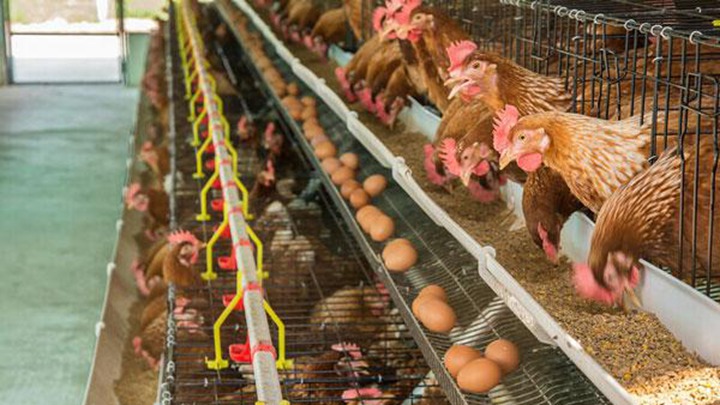

In recent years, the poultry farming industry in Africa has developed rapidly, and the feed market has also maintained a high growth rate. With the large and growing population of African countries and the continuously rising demand for daily animal protein, the poultry farming industry, especially chicken farming, is attracting more and more farmers and investors. Therefore, chicken feed production is becoming a hot sector in the African feed market, and more and more people want to know how to make chicken feed.
Why make your own chicken feed?
1. Making your own chicken feed saves money
If you have been raising chickens for a long time, you know that buying feed is the most costly part of the business, accounting for almost 50% to 70% of the total cost. The best way to save money is to make your own feed. Although it takes a little effort in the early stage, but in the long run, buy raw materials for their own processing, much cheaper than buying finished products directly, the money saved is real profit.
2. The raw materials of chicken feed made by yourself are safe.
If you make your own feed, you can be sure of the safety of the raw materials. Nowadays, many commercial feed prices are very expensive, more and more family chicken farmers choose to do it themselves. Going to the local buy raw materials, you can clearly know what is in the feed, do not have to worry about the mess of additives. And you can always adjust the formula according to the different growth stages of the chickens – more protein for chicks, more calcium for laying chickens. This kind of flexibility is not comparable to buying ready-made feed.
3. Make your own chicken feed can flexibly meet the needs of chickens
Different breeds of chickens have different nutritional needs. Eggs, broilers and chicks all need different feed. If you go to buy ready-made, egg feed, broiler feed, chick feed to buy down, but a large sum of money. Do it yourself feed is much simpler, buy a few basic ingredients, according to the needs of the mix on the line: egg chickens more shellfish, broiler chickens more corn, chickens with more fishmeal. This not only saves money, but also ensures that each kind of chicken can eat right and grow well.
4. Easy to make chicken feed by yourself
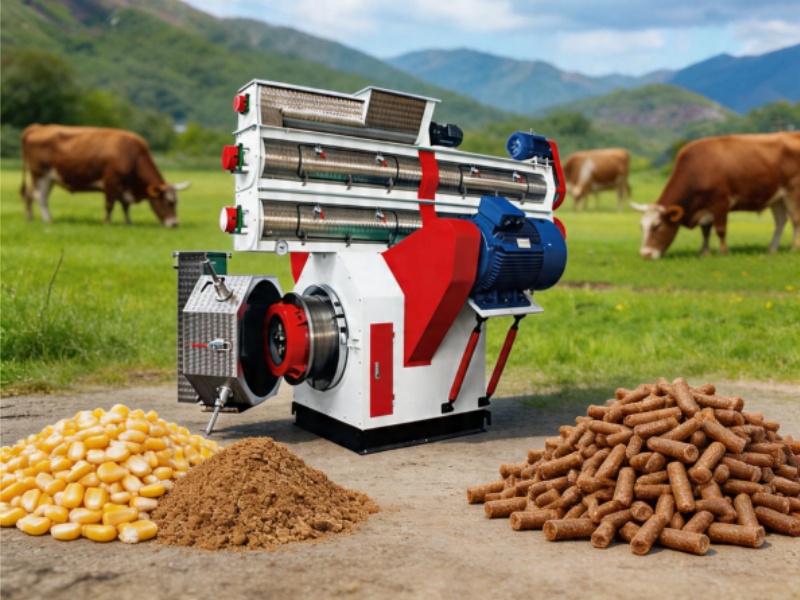
Many people think it’s troublesome to make feed by yourself, but in fact it’s not that complicated. Buy a small pellet machine, first set the recipe, the ingredients are mixed according to the proportion, put into the machine, out is a piece of tight and uniform feed particles. This homemade pellets are more durable than many commercial feeds, and chickens love them. Equipment investment is not big, small-scale farmers can afford. You can take one or two hours a week to make a week’s worth of feed, and then take it directly when feeding, which is both convenient and hassle-free.
Understand the nutritional requirements of chickens
To make chicken feed, you first need to understand the nutritional needs of chickens. Chickens in different stages of growth, the body changes a lot, need different nutrition. Only by adjusting the feed formula according to their physiological characteristics and production goals can chickens grow well, lay more eggs and get sick less often.
1. First of all, in the period of chicks (0-18 weeks).
Chickens at this stage grow and develop very fast, just like a child’s growing body, and need nutrition that is both comprehensive and intensive. The diet should be high in energy and protein, with a protein content of roughly 18%, so as to support the healthy development of bones, muscles and feathers. At the same time, vitamins A, D, E and K, as well as B vitamins, should not be missing, and minerals such as calcium and phosphorus, which help chicks build a strong immune system and increase resistance, are also critical. It can be said that a good nutritional fight in the chick stage directly affects the production performance of the chicken in its lifetime.
2. Next, in the broiler period.
Whether it’s broilers or laying hens, this stage is characterized by rapid growth in body weight and muscle mass, and a higher density of nutrient requirements. Take broilers, protein levels typically need to be 20% or higher to support rapid weight gain and efficient muscle deposition. In addition, amino acids, energy and various trace elements should also be balanced, so as to ensure that chickens grow fast, have a high feed conversion rate and do not waste every mouthful of material.
3. When the chicken enters the egg-laying period (about 18 weeks and beyond).
At this time the nutritional focus should shift from promoting growth to supporting egg production.
The most important nutrient is calcium, which is essential for eggshell formation. A laying hen needs about 4 grams of calcium per day. If the intake is insufficient, the chicken will use the calcium reserves in its bones, which will make the bones brittle over time and reduce egg production. In addition to calcium, it is also important to have enough protein, vitamins and minerals, which work together to maintain high egg production rates and good egg quality.
4. Finally, during the moulting period.
When chickens change feathers, they temporarily stop laying eggs and their bodies enter a phase of recovery and regeneration. At this time, the demand for calcium will decrease, but the demand for protein and energy will increase, especially sulfur-containing amino acids, such as methionine, which is helpful for feather regeneration. Good nutritional adjustments at this stage can shorten the recovery time for feather replacement, allowing chickens to restart laying sooner and with better subsequent laying performance.
In general, the nutritional requirements of chickens show very obvious stage characteristics: early to full development, need high protein and high nutrient density; middle to rapid growth, need high energy and high protein; late to ensure egg production, need high calcium and balanced nutrition; to the feathering of such a special stage, need high protein, medium energy to support the recovery and regeneration. After figuring out these rules, you can make a feed that really suits your chickens, saving money and efficiency.
Examples of chicken feed recipes (chicks, brooders and laying hens)
1. First of all, in the early stage of chicks, the formula is centered on “high protein + high nutrient density”.
Typical formulas are based on corn as the main energy source (about 50-60%), supplemented by soybean meal (25-35%) and high-protein ingredients such as fishmeal (5-10%). In addition, formulas contain calcium and phosphorus sources (e.g., limestone, dicalcium phosphate) as well as vitamin premixes. The protein content is usually around 22%-24% to support rapid growth, bone development and immune system formation in chicks.
2. Next, during the growth phase of the brooder, the formulation is gradually shifted to a “moderately lower protein content + higher energy”.
The proportion of corn is increased (about 55%-65%), while the proportion of protein components such as soybean meal is reduced. Other energy sources such as fat or by-products (e.g., rice bran, DDGS) can also be added to the formula. Protein levels typically decrease to about 18-20% as the feeding emphasis shifts from early development to muscle growth and weight gain, while improving cost-effectiveness and controlling fat deposition.
2. Subsequently, during the fattening phase (or pre-laying phase), formulations further emphasize “high energy + medium protein”.
The corn content is increased to over 60%, the protein source is again reduced, and fat is added to increase energy density. The goal of this phase is to maximize feed conversion to help the chickens reach their target body weight or to prepare them for egg production. 3.
3. Finally, during the laying phase, calcium levels are increased significantly
During the egg-laying phase, the nutritional structure changes significantly. While the protein content remains at a moderate level, the calcium content increases dramatically to promote eggshell formation. In addition to energy (corn) and protein (soybean meal), more calcium sources are added, such as limestone or eggshell meal. Vitamins and minerals are also rationed more precisely to maintain high egg production and strong eggshell quality.
Powdered vs. pelleted feeds: which is better for chickens?
Regarding the choice between powdered and pelleted feeds, many people don’t know what to choose. In fact, by understanding the characteristics of each of them, you can make an appropriate decision based on the actual situation.
First of all, fundamentally, the nutritional composition of powder feed and pellet feed is the same, the only difference is the physical form.
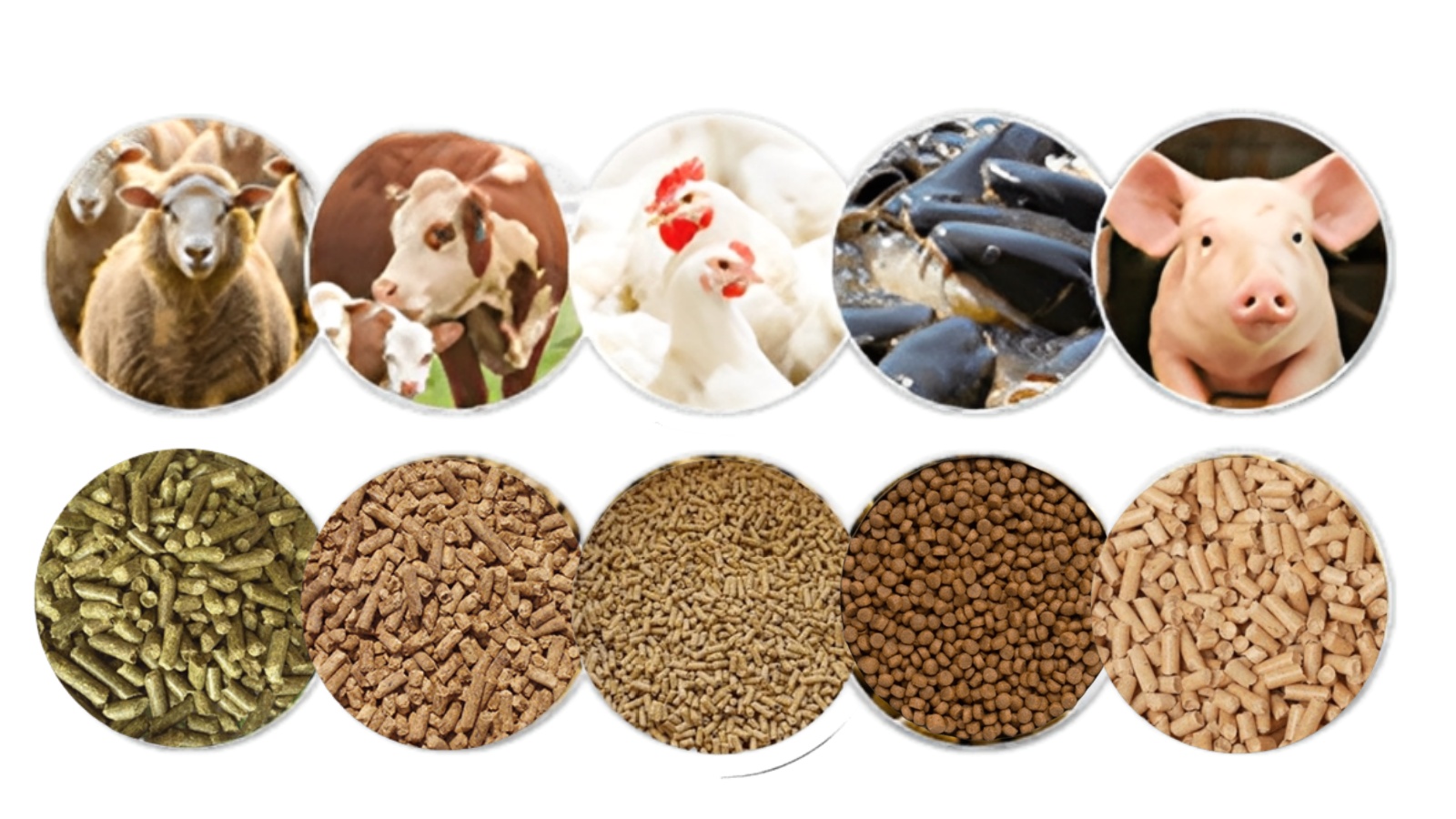
Powdered feed is a loose powder made by grinding and mixing grains, protein ingredients and various additives, which looks a bit like roughage. Pellet feed, on the other hand, is the powder through high temperature and high pressure processing, compressed into a small, tight and uniform particles. In other words, the same raw materials, just made a fine and coarse two kinds of appearance.
Secondly, from the feeding performance point of view, these two kinds of feed have their own benefits. Powdered feed is easier to feed and digest, especially for chicks, their digestive system is not yet mature, eat powdered feed is not difficult, the stomach is also acceptable. The advantage of pellets is that they provide a more uniform nutrient intake. Because chickens can’t pick and choose when eating pellet feed, each bite is mixed with uniform nutrition, and there will be no such situation as only eating what they like and leaving what they don’t like.
Third, from the perspective of production and management efficiency, the advantages of pellet feed are more obvious. It has a tight structure, which is not easy to produce dust and is not easy to be wasted by chickens pecking and spilling. Moreover, pellet feed can improve the feed conversion rate, and chickens grow faster and lay more eggs with the material they eat, which is especially suitable for automated feeding and large-scale farms. In contrast, powdered feed has a simpler production process and lower cost, but the disadvantage is that it is easy to spill, and chickens are also easy to pick at it, so there will be more waste.
Finally, as far as stage suitability is concerned, the two feeds actually complement each other. In the early stage, that is, 0 to 3 weeks after the birth of chicks, powdered feed or small pellets are more suitable, because the chicks are easy to feed and digest. In the transition stage, you can slowly switch from powder feed to pellet feed to allow the chick to have a process of adaptation. After entering the adult stage, the advantages of pellet feed are reflected, which can effectively improve the feed conversion rate and reduce losses.
In conclusion, there is no absolute “better” choice, it depends on your production goal. If you are raising chicks or want to reduce upfront costs, powdered feed is more suitable. If you are looking for management efficiency and large-scale production, pelleted feed is definitely a better choice. Figure out your needs and choose the right form of feed to raise your chickens well and spend your money wisely.
Steps to make homemade chicken feed in detail
1. Raw material collection and crushing
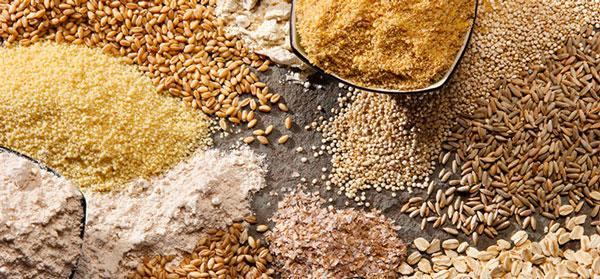
The first step is to prepare the raw materials. According to the nutritional requirements of chickens, choose the right grains, protein ingredients (e.g. soybean meal, fish meal) and necessary additives. The dosage of each ingredient should be strictly controlled, because it is not only related to the nutritional balance, but also has a direct impact on whether the pellets are strong and durable. After the raw materials are ready, the feed hammer mill should be used to crush them into fine powder, the finer the better, so that the later mixing and pelleting effect is ideal.
2. Mixing
After all the raw materials are crushed into powder, it is necessary to mix. This step seems simple, but in fact very critical. Only when all the powders are mixed well, the nutrition of the chicken will be balanced in every bite. If you have a small number of chickens at home, you can use a small mixer, or even manually mix a few times; if it is a large-scale production, it is best to use a special mixer, which ensures that the raw materials are mixed quickly and evenly.
3. Granulation
Mixed powder can enter the granulation process. This step is the core of the whole process, which directly determines the quality of feed pellets. Before pelletizing, the powder is usually tempered, that is, to control the temperature, time and the amount of water, and sometimes use steam. When these factors are well grasped, the pellets are firmer and more resistant to storage. In addition, the diameter and thickness of the pellet maker’s mold will also affect the hardness and yield of the pellets – the thicker the mold, the harder the pellets, but the yield may be lower. So choose the right mold according to the size and breed of the chicken.
4. Cooling
Pellets are hot and humid when they first come out of the pelletizer, they cannot be bagged or fed to chickens directly, they need to be cooled first. However, whether you want to specialize in cooling equipment or not depends on the scale of your production. If you just do some feed in small quantities in your own yard, then there is no need to buy a cooling machine, spread out the good pellets in a clean place, naturally cool on the line, save money and save time. But if you are running a feed mill or a large farm with a large daily output, then it is best to have a cooling machine, which can quickly cool down and dehumidify, greatly improve efficiency and save time and labor costs.
5. Packaging
The last step is packaging. This step is not necessary for everyone. If you make feed for your own chickens, there is no need for a packaging machine at all, just find a clean bag and pack it up. But if you are specialized in producing chicken feed to sell, then the packaging link is very important. With a packaging machine, you can quickly bagging, sealing, both beautiful and convenient storage and transportation, looks more formal.
In short, these five steps are interlocked. Small-scale own use, if you do the fourth step of natural cooling can be, packaging simple processing on the line; large-scale production, cooling and packaging equipment can help you save a lot of time and cost. Figure out the requirements of each step, according to their own actual situation to operate, do chicken feed is actually not complicated.
Depending on the scale of production, the equipment required for chicken feed production can be divided into three stages, from simple home use to fully industrialized systems. Each stage represents an increase in efficiency, automation and production capacity.
Equipment required for different stages of homemade chicken feed production
1. Equipment for small home or farm use
For a few dozen chickens raised free-range at home, or for small-scale yard farming, a basic setup that includes a pulverizer and a mixer is usually sufficient. The pulverizer is used to break the hard grains of corn and soybeans into fine powder, while the mixer is responsible for mixing the various powders well to ensure that each handful of feed is nutritionally balanced. This simple set of equipment is mainly used to produce powdered feed, the investment is not big and the operation is not complicated, so the average person can get started just by looking at it. It is more suitable for self-sufficiency mode, growing some food and processing it into feed for chickens, rather than for taking it out to sell. Although the yield is not high, it is better than saving money and trouble.
2. Equipment for medium-sized farms
When the scale of farming is expanded to hundreds or even thousands of chickens, the equipment needs to be upgraded. Medium-sized farms are usually equipped with feed mixers and feed pelletizers. The focus of production at this stage also shifts from powdered feed to pellets. The mixer ensures that the nutrients are mixed more evenly and consistently, while the pelletizer crushes the mixed meal into a small, tightly packed pellet. The benefits of pelleted feed are clear – chickens eat it without waste, feed is more efficiently utilized, and it’s less time-consuming to manage. This configuration is ideal for medium-sized farms that seek higher productivity and more standardized feed management.
3. Equipment for large-scale feed mills or commercial investors
If you are opening a feed mill or doing large commercial farming investment, it is necessary to on the whole set of poultry feed production line. This is not one or two machines can handle the matter, but includes raw material processing, grinding, batching, mixing, pelletizing, cooling, screening and packaging, including a complete set of automated systems. The entire process is highly integrated, and is essentially automated by machines from the time the raw materials come into the plant to the time the finished product leaves the warehouse. This kind of production line is designed for large-scale commercial production, which is concerned with high precision, high consistency and high output, and can make dozens or even hundreds of tons of feed in one day.
In short, how to choose equipment, directly look at the production scale is right. Small system is simple and convenient, enough to use on the line; medium-sized system is the pursuit of efficiency and feed quality, to upgrade to pellets; large-scale system is to be fully industrialized and automated, the pursuit of scale and efficiency. Figure out their actual production and input budget, choose the right equipment grade, in order to both meet the demand and not spend money.